Complete guide to growing Tropaeolum tuberosum (mashua) in UK gardens and permaculture systems. From planting to harvest, overwintering to propagation – everything you need to succeed with this hardy Andean perennial.
Why Grow Mashua in the UK?
Mashua is perfectly suited to UK growing conditions. As a high-altitude Andean crop, it evolved in cool, moist climates with significant temperature fluctuations – conditions remarkably similar to much of Britain. While most exotic crops struggle in our climate, mashua actually thrives here, often performing better than in warmer regions.
As a permaculture crop, mashua offers exceptional value: it’s a productive perennial requiring minimal inputs, resistant to common pests and diseases, and provides edible tubers, leaves, and flowers. Once established, it returns year after year with little intervention – embodying the permaculture principle of obtaining a yield from self-maintaining systems.
Climate Requirements
Perfect for UK Conditions
Mashua requires a relatively long growing season (6-8 months) but is remarkably tolerant of cool temperatures and frost. In fact, light frosts improve both tuber development and flavour.
Optimal conditions:
- Temperature: Grows well in 10-20°C range; tolerates light frosts
- Frost tolerance: Foliage damaged by hard frost, but tubers survive underground to -5°C or lower
- Rainfall: Appreciates consistent moisture; our wet UK climate suits it well
- Daylight: Short-day plant – tubers form as days shorten in autumn
- Growing season: April/May planting to November/December harvest
UK regional suitability: Mashua grows successfully throughout the UK, from Cornwall to Scotland. In Scotland and northern England, consider planting in warmer microclimates or using cloches to extend the season slightly. In southern regions, it’s completely straightforward.
Our second-generation Welsh mountain stock has proven especially hardy, selected through exposure to challenging conditions at altitude.
When to Plant Mashua
UK Planting Calendar
Spring planting (recommended):
- Southern UK: Mid-April to early May
- Midlands: Late April to mid-May
- Northern UK/Scotland: Early to mid-May
- Key indicator: After risk of hard frost has passed; soil temperature above 8°C
Plant tubers similarly to potatoes – around the time you’d plant second earlies. If frost threatens after shoots emerge, earth them up slightly or provide fleece protection.
Autumn planting (advanced): Some growers plant in late autumn (October-November), allowing tubers to overwinter in situ. This works well in milder regions or with good drainage, but spring planting is more reliable for beginners.
Site Selection and Soil Preparation
Permaculture Approach to Soil Building
Site selection:
- Sunlight: Full sun to partial shade; tolerates more shade than potatoes
- Drainage: Good drainage essential; waterlogged soil causes tuber rot
- Soil type: Adaptable, but prefers loose, friable soil for easy tuber development
- pH: 5.5-7.0 (slightly acidic to neutral); tolerant of a wide range
Soil preparation:
Rather than heavy digging and fertilization, use permaculture principles to build healthy soil:
- Compost incorporation: Add well-rotted compost or leaf mould to planting areas. Mashua doesn’t need high fertility but appreciates organic matter for soil structure.
- Mulching: After planting, mulch with straw, leaves, or compost. This suppresses weeds, retains moisture, and continues feeding the soil.
- No-dig approach: If your soil is reasonable, simply make planting holes rather than digging the entire bed. The vining growth habit means less soil disturbance is needed.
- Green manures: If preparing a new bed, consider growing a winter green manure (field beans, grazing rye) the season before planting mashua.
Avoid: Fresh manure or high-nitrogen fertilizers, which promote excessive foliage at the expense of tubers. Mashua is adapted to relatively poor soils and doesn’t require heavy feeding.
Planting Mashua Tubers
Step-by-Step Planting Guide
Tuber preparation:
- Select firm, healthy tubers (avoid any that are soft or mouldy)
- Tubers can be planted whole or cut into pieces with at least 2-3 eyes (like potatoes)
- If cutting tubers, allow cut surfaces to dry for 24 hours before planting
- No chitting (pre-sprouting) necessary, though you can if desired
Planting method:
- Make planting holes 10-15cm deep
- Space tubers 30-40cm apart in rows 60-75cm apart (for cultivation access)
- In polyculture/forest garden settings, space according to your design – they can be closer if supported vertically
- Place tubers in holes, eyes facing upward (or on their side if not obvious)
- Cover with soil and firm gently
- Water if soil is dry
- Mark positions (shoots can take 3-4 weeks to emerge)
Planting density:
- Standard spacing: 9-12 plants per square metre
- Intensive spacing: Up to 16 plants per square metre with vertical support
- Polyculture: Flexible spacing based on companion plants and support structures
Growing Season Care
Low-Maintenance Perennial Management
One of mashua’s great advantages is its minimal care requirements. Once established, it largely looks after itself.
Watering:
- Water regularly in first 4-6 weeks until established
- Once growing vigorously, mashua is relatively drought-tolerant
- In typical UK summers, rainfall is usually sufficient
- Water during extended dry periods, especially in late summer when tubers are forming
- Consistent moisture produces better yields, but don’t waterlog
Support (optional):
Mashua is a vigorous vine, growing 2-3 metres or more. You have several options:
- No support: Let it sprawl on the ground (easiest, but takes more space)
- Trellis/stakes: Provide vertical support for more compact growing
- Living support: Allow it to climb through corn, sunflowers, or shrubs (permaculture polyculture approach)
- Forest garden: Use as a ground cover or let it climb into lower branches
Supporting vertically increases yield per square metre and improves air circulation, reducing disease risk.
Weeding and mulching:
- Keep area weed-free in first 6-8 weeks while plants establish
- Once mashua vines are growing vigorously, they suppress most weeds themselves
- Maintain mulch layer to conserve moisture and continue suppressing weeds
- Top up mulch mid-season if needed
Feeding:
- Generally unnecessary in reasonable soil
- Compost mulch provides adequate slow-release nutrients
- Comfrey or nettle tea can be applied mid-season if plants seem weak
- Avoid high-nitrogen feeds (causes excess foliage, poor tuber development)
Pests, Diseases, and Problems
Remarkably Trouble-Free in UK Conditions
One of mashua’s greatest advantages is its resistance to common pests and diseases. In our years of growing it in Wales, we’ve encountered virtually no problems.
Pest resistance:
- Aphids: Rarely bothered (the peppery foliage seems to deter them)
- Slugs: May nibble young shoots but rarely cause significant damage
- Caterpillars: Occasional leaf damage but not serious
- Wireworms: Can tunnel into tubers in some soils; less common than with potatoes
Disease resistance:
- Blight: Not susceptible to potato blight (major advantage)
- Fungal diseases: Rarely affected in UK; good drainage prevents root rots
- Viral diseases: Uncommon in UK garden settings
Common issues and solutions:
- Slow emergence: Normal; can take 4-6 weeks. Be patient.
- Poor growth: Usually waterlogged soil or too much shade. Improve drainage.
- No tubers: Likely planted too late (needs full season); or too much nitrogen (excessive foliage).
- Small tubers: Harvest too early (wait until after first frost); insufficient growing season.
Harvesting Mashua
Timing is Everything
Mashua is a short-day plant, meaning tubers form as day length decreases in autumn. Frost exposure improves both yield and flavour, so patience is rewarded.
When to harvest:
- Earliest: Late October (southern UK)
- Optimal: November to early December
- Key indicator: After first hard frosts have knocked back the foliage
- Latest: Before ground freezes solid (rare in most UK locations)
Don’t rush. The first frosts trigger sugars to develop in tubers, significantly improving flavour. Tubers harvested too early can be excessively peppery and bitter.
How to harvest:
- Wait for foliage to die back from frost
- Cut back dead vines to ground level (compost them)
- Carefully dig around plants with a fork, starting 30cm from centre
- Lift tubers gently – they form in a cluster beneath the planting point
- Expect 10-20 tubers per plant (sometimes more), ranging from marble-sized to small potato-sized
- Brush off excess soil (don’t wash if storing)
Yield expectations:
- Typical yield: 1-2 kg per plant in good conditions
- From 1 kg of seed tubers, expect 10-15 kg harvest (10-15x multiplication)
- Yields improve in second and subsequent years as plants establish
Storage
Mashua tubers store excellently under proper conditions:
- Location: Cool, dark, frost-free place (shed, garage, cellar)
- Temperature: 4-10°C ideal
- Method: Store in boxes with slightly damp sand, sawdust, or newspaper
- Duration: 4-6 months easily; often longer
- Checks: Inspect monthly, remove any that are softening
Save your best, largest tubers for replanting next spring.
Overwintering and Perennial Management
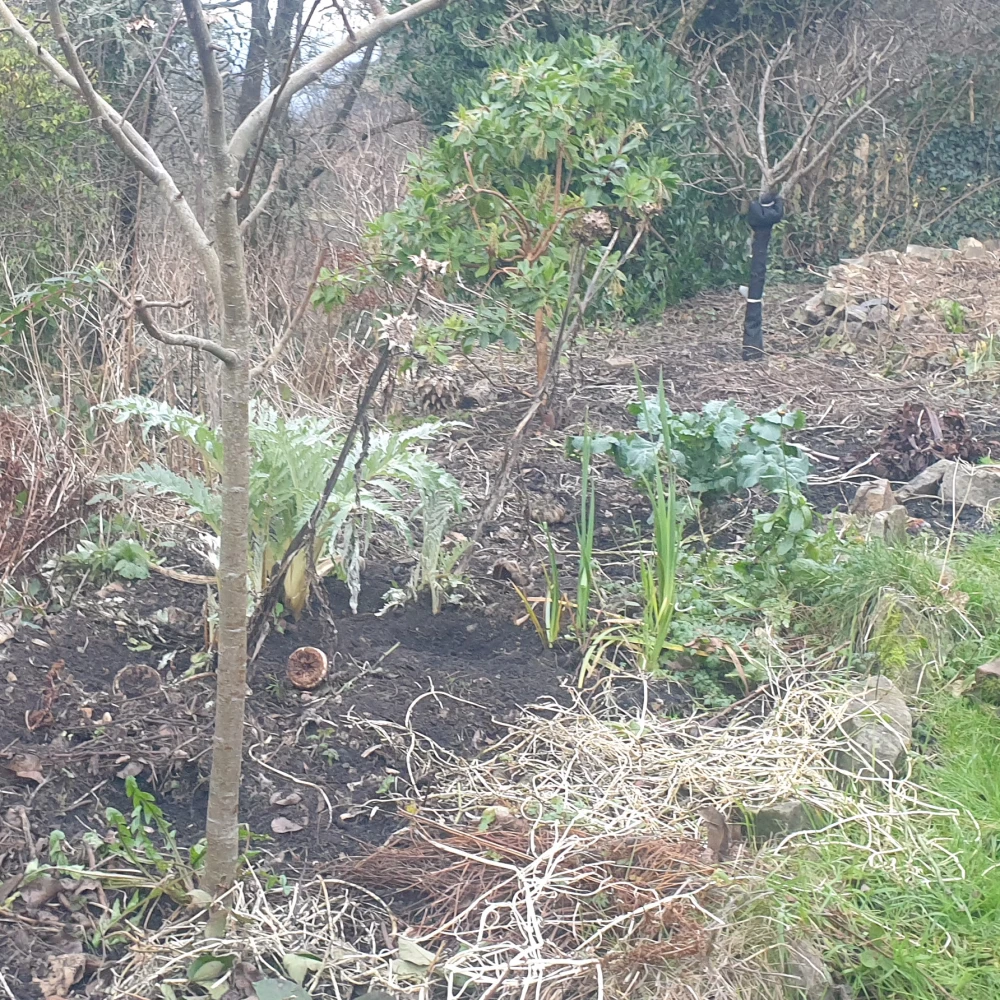
True Perennial Potential
Mashua can be grown as a genuine perennial in much of the UK, with tubers left in the ground to reshoot each spring.
In-ground overwintering:
- Best for: Well-drained soil; milder regions; forest garden settings
- Method: Simply leave tubers in the ground; they reshoot in spring
- Protection: Mulch heavily (15-20cm of straw, leaves, or compost) for extra frost protection
- Benefits: Zero work; earlier spring growth; increasing yields over years
- Risks: Tuber rot in waterlogged soil; extreme cold damage (rare in UK)
Our Welsh mountain stock has overwintered successfully in the ground for multiple years, even at altitude with minimal protection. This demonstrates exceptional hardiness.
Harvest-and-replant approach:
- Harvest all tubers in autumn
- Store over winter
- Replant selected tubers in spring
- Advantages: Control over planting layout; inspection of tubers; opportunity to share/sell surplus
Hybrid approach (recommended):
- Harvest most tubers for eating
- Leave some in the ground as perennial patch
- Also store some for controlled spring planting
- Best of both worlds: perennial patch provides early growth; stored tubers allow expansion
Propagation
Tuber division: Primary method. Each saved tuber becomes next year’s planting stock. Can cut large tubers into 2-3 pieces.
Seed: Mashua produces seed in UK climates, but tuber propagation is much easier and faster. Seed-growing is for breeders or adventurous experimenters.
Multiplication rate: From 10 tubers planted, expect 150-200 tubers harvested. This rapid multiplication means you can quickly establish a productive patch from a small initial purchase.
Companion Planting and Polycultures
Mashua works beautifully in diverse planting schemes:
Good companions:
- Corn/sunflowers: Provide living support for vines
- Beans: Traditional “three sisters” approach adapted for UK
- Perennial onions: Complementary rooting depths
- Herbs: Lemon balm, mint, oregano (similar moisture requirements)
- Brassicas: Can provide winter protection for in-ground tubers
Avoid: Potatoes (similar growth habit leads to competition; though they’re not closely related disease-wise).
Learn more about integrating mashua into forest gardens and permaculture systems →
Troubleshooting Common Questions
Q: My mashua hasn’t sprouted after 4 weeks. Is something wrong?
A: Probably not. Mashua can take 4-6 weeks to emerge, especially in cooler conditions. Be patient. Check one tuber carefully – if it’s firm and showing tiny shoots, all is well.
Q: The plants are growing huge vines but I can’t see any tubers forming. Why?
A: Tubers form late in the season as days shorten. You won’t see them until harvest. Excessive foliage can indicate too much nitrogen – reduce feeding.
Q: Can I grow mashua in containers?
A: Yes, but they need large containers (30+ litres) and won’t yield as heavily as in-ground plants. Use good compost, ensure drainage, and provide support for vines.
Q: My tubers taste very peppery and bitter. Did I do something wrong?
A: You harvested too early. Wait until after several hard frosts – this sweetens the tubers considerably. Also try cooking them, which mellows the flavour.
Q: Will mashua become invasive?
A: No. It doesn’t spread vegetatively and seed germination in UK conditions is minimal. It stays where you plant it.
Growing Calendar at a Glance
| March-April | Prepare beds, incorporate compost |
| April-May | Plant tubers 10cm deep after last frost |
| May-June | Shoots emerge, keep weeded and watered |
| July-August | Vigorous vine growth, flowering begins, mulch well |
| September | Flowers peak, tubers beginning to form |
| October | Tubers swelling, reduce watering |
| November | First frosts kill foliage, tubers ready to harvest |
| December-Feb | Harvest, store tubers, enjoy eating! |
Ready to Start Growing?
Mashua is one of the most rewarding perennial crops you can grow in UK conditions – productive, easy, and genuinely unusual. Our second-generation Welsh mountain stock gives you the hardiest, best-adapted plants available in the UK.
Questions about growing mashua in your specific conditions? Get in touch – we’re here to help you succeed.