Mashua as a ground-layer perennial in forest gardens and polyculture systems. From traditional Andean agriculture to modern UK permaculture design – integrating this productive perennial into climate-resilient food systems.
Why Perennials Matter in Permaculture Design
Annual vegetable gardening, while productive, demands significant yearly inputs: soil preparation, sowing, transplanting, intensive watering and feeding. It’s a pattern inherited from industrial agriculture, not from nature.
Perennial food crops offer a different paradigm – one more aligned with natural ecosystems and permaculture ethics. Once established, they return year after year with minimal intervention, building soil rather than depleting it, creating habitat, and producing yields from self-maintaining systems.
Mashua represents this shift beautifully: a productive food crop that requires little once established, overwinters successfully in UK conditions, and integrates seamlessly into diverse planting schemes. It embodies the permaculture principle of obtaining a yield while minimizing work.
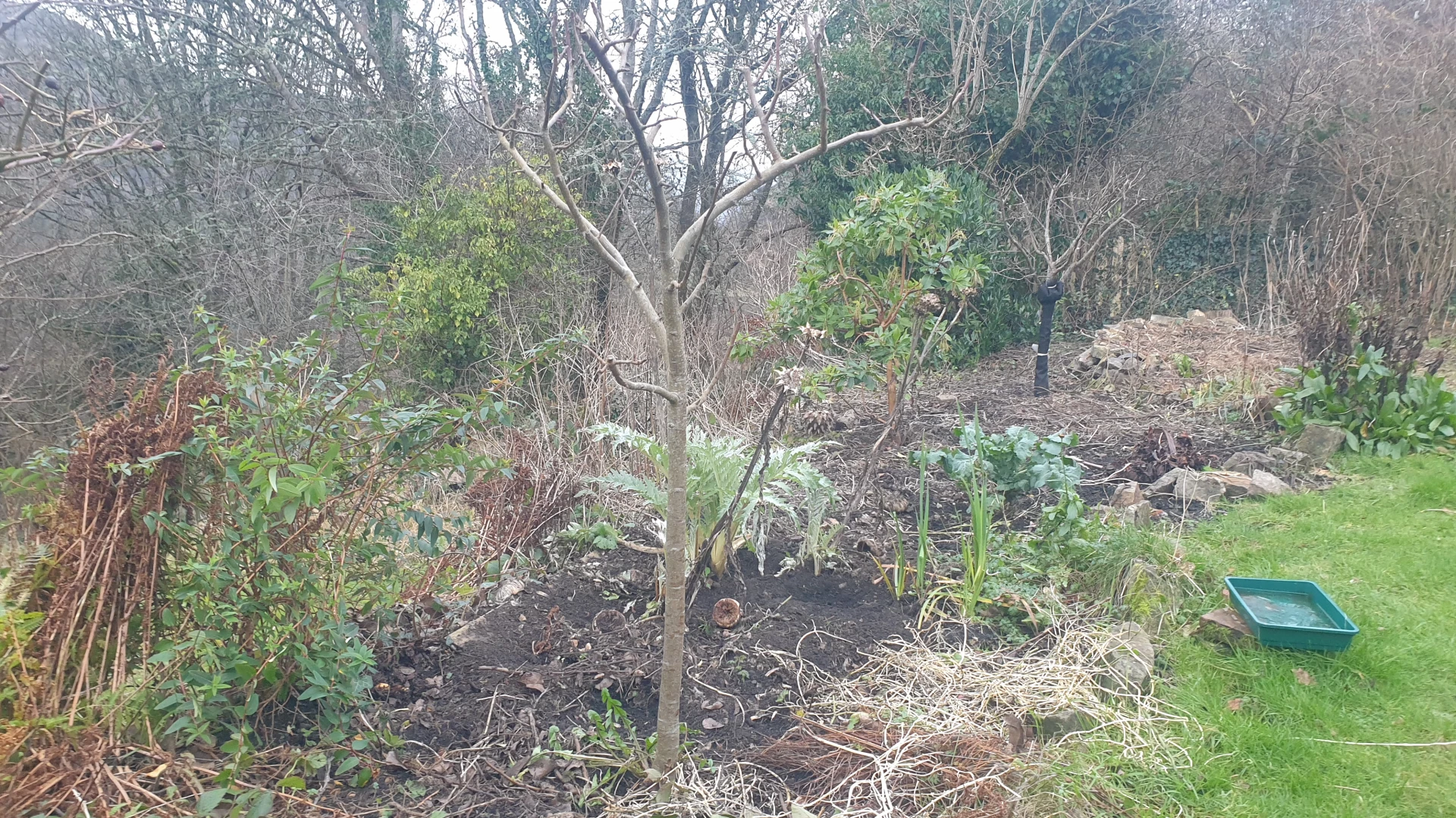
Mashua in the Forest Garden
Ground Layer Positioning
Forest gardens are structured in vertical layers, mimicking woodland edge ecosystems. Understanding where mashua fits is key to successful integration.
The seven layers:
- Canopy (large fruit/nut trees)
- Sub-canopy (smaller fruit trees, nitrogen fixers)
- Shrub layer (currants, gooseberries, hazels)
- Herbaceous layer (perennial vegetables, herbs)
- Ground cover layer (strawberries, creeping thyme)
- Rhizosphere (root crops, tubers)
- Vertical layer (climbers, vines)
Mashua occupies multiple niches:
- Primarily rhizosphere: Tuber production at soil level
- Ground cover potential: Sprawling vines suppress weeds
- Vertical layer option: Can climb supports or companion plants
This multi-layer capacity makes mashua exceptionally valuable – it produces food underground while its vines fill above-ground space, maximizing productivity per square metre.
Light Requirements and Canopy Tolerance
Unlike most tuber crops that demand full sun, mashua tolerates partial shade remarkably well. In its native Andes, it often grows under light tree canopy or taller crops.
Light tolerance:
- Full sun: Maximum tuber production
- Partial shade (4-6 hours sun): Good production, slightly later harvest
- Dappled shade (under young trees): Acceptable yields, longer vines seeking light
- Too much shade (under mature canopy): Excessive foliage, poor tuber development
This shade tolerance makes mashua ideal for establishing food production under developing tree canopies in young forest gardens. As your fruit trees grow, mashua continues producing while sun-demanding annuals fail.
Practical Forest Garden Integration
Under young fruit trees (years 1-5):
- Plant mashua in rings around newly planted apples, pears, or plums
- Space 40-50cm from trunk to avoid root competition
- Vines can climb tree supports/stakes (beneficial mutual support)
- As tree establishes, mashua provides living mulch
- Produces yields while waiting for tree fruiting
In shrub layer guilds:
- Excellent beneath currants, gooseberries, jostaberries
- Plant on north side of shrubs (receives more light in UK)
- Vines can grow through shrub base without harming woody plants
- Different harvest times avoid competition for your attention
Woodland edge plantings:
- Thrives at bright woodland edges (facing south or west)
- Can grow under hazel, elder, or other nitrogen-fixing edge species
- Works well in sunny clearings within wooded areas
Companion Planting with Mashua
Traditional Andean Polycultures
For thousands of years, Andean farmers have grown mashua in diverse polycultures, not monocultures. These time-tested combinations offer valuable lessons for UK permaculture design.
Traditional Andean companions:
- Potatoes: Grown together, different harvest times
- Oca: Another Andean tuber with similar requirements
- Maize: Provides climbing support for mashua vines
- Quinoa: Grain crop growing taller than mashua foliage
- Lupins: Nitrogen fixation benefits entire polyculture
These combinations work because they occupy different niches: different rooting depths, different heights, different harvest times, different pest profiles. The result is higher total yields than monocultures while building soil health.
UK-Adapted Companion Planting
We can adapt Andean wisdom to UK conditions using available crops with similar ecological functions.
Excellent mashua companions for UK:
Living supports (structural layer):
- Sweetcorn: Direct analogue to traditional maize supports
- Sunflowers: Provide sturdy climbing structures
- Jerusalem artichokes: Tall perennials with similar season; different rooting depth
- Cardoons: Large architectural perennial providing support
Perennial alliums:
- Welsh onions (Allium fistulosum): Pest-confusing aromatics, year-round harvest
- Everlasting onions (A. perutile): Similar growth pattern to Welsh onions
- Chives: Low-growing, flowers attract beneficials
- Garlic chives: Late flowers when mashua blooms
Alliums and mashua work wonderfully together: both perennial, different harvest seasons, potentially complementary pest resistance. Plant alliums in gaps between mashua positions.
Nitrogen fixers:
- Comfrey: Deep roots mine minerals, cut-and-drop mulch feeds mashua
- Clovers: Living mulch around mashua, fixes nitrogen
- Vetch: Annual nitrogen fixer for first-year plantings
- Winter field beans: Sown between mashua rows in autumn
Aromatic herbs:
- Lemon balm: Vigorous perennial, attracts pollinators
- Mint (contained): Aromatic pest confusion
- Oregano: Ground cover between mashua patches
- Thyme: Low growing, complementary harvest season
Avoid planting with:
- Potatoes: While traditionally grown together in the Andes, they compete for similar space in small UK gardens. Better to separate them.
- Very vigorous ground covers: Mashua can be outcompeted by aggressive spreaders like bindweed or ground elder.
Building Mashua Guilds
What is a Guild?
A guild is a group of plants that support each other through complementary functions: nutrient accumulation, nitrogen fixation, pest confusion, pollinator attraction, structural support, or ground cover. Guilds are fundamental to permaculture design.
Example Mashua Guild: “The Mountain Resilience Guild”
(Based on our Welsh mountain growing conditions)
Structural layer:
- Jerusalem artichokes: Tall perennial providing wind protection and mashua support
Main crop:
- Mashua: Sprawling vines, late-season tuber harvest
Companion crops:
- Welsh onions: Year-round allium harvest, pest confusion
- Wild garlic (Allium ursinum): Spring greens, shade-tolerant, naturalizes
Soil builders:
- Comfrey: Deep nutrient accumulation, chop-and-drop mulch
- White clover: Living mulch, nitrogen fixation
Aromatics:
- Lemon balm: Bee attractant, edible leaves, vigorous perennial
Functions this guild provides:
- Multiple food harvests across seasons (wild garlic in spring, Welsh onions year-round, Jerusalem artichokes in winter, mashua in late autumn)
- Nitrogen fixation (clover)
- Nutrient mining and cycling (comfrey)
- Pollinator support (lemon balm, mashua flowers)
- Structural support and wind protection (Jerusalem artichokes)
- Pest confusion through diversity
- Soil building and protection
Example Guild: “Young Fruit Tree Guild with Mashua”
Canopy (future):
- Apple tree: Central element, currently young (years 1-5)
Nitrogen fixers:
- Siberian pea shrub (Caragana): On north side, fixes nitrogen, edible pods
Dynamic accumulators:
- Comfrey: Placed at drip line, mines minerals
Ground layer tubers:
- Mashua: Ring around tree (50cm from trunk), productive while tree establishes
Aromatic insect attractants:
- Chives: Between mashua plants, supports pollination
- Tansy: Pest deterrent at guild edges
Ground covers:
- Creeping thyme: Low ground cover between other plants
- Strawberries: Early summer fruiting, fills gaps
As the apple tree matures and casts more shade, mashua may need relocating. But for the first 5-7 years, this guild produces multiple yields while the main tree establishes.
Zone and Sector Analysis for Mashua
Permaculture Zones
Permaculture zones organize your site based on visit frequency and intensity of management. Mashua’s low-maintenance nature makes it suitable for outer zones.
Zone 0 (House): Not applicable
Zone 1 (Daily access – kitchen garden):
- Possible but not ideal (mashua is seasonal harvest, not daily picking)
- Could include a small patch for flower harvesting (edible, beautiful in salads)
Zone 2 (2-3 times weekly – main productive garden):
- Ideal for mashua
- Close enough for occasional checks during growing season
- Easy access for harvest time
- Integrate with other seasonal crops
Zone 3 (Weekly/fortnightly – field crops, orchards):
- Perfect for mashua
- Minimal maintenance requirements suit infrequent visits
- Excellent beneath young orchard trees
- Ideal as perennial patch left to self-maintain
Zone 4-5 (Wild, minimal intervention):
- Not ideal (harvest would be difficult; too wild)
Sector Analysis (Sun, Wind, Frost)
Sectors describe energies flowing through your site: sun, wind, frost, water flow. Mashua’s characteristics make it useful in challenging sectors.
Sun sectors:
- South-facing: Maximum production, full sun
- East-facing: Excellent, morning sun suits mashua well
- West-facing: Good, afternoon sun works fine
- North-facing: Acceptable in open sites; we grow successfully on north slopes at altitude
Frost sectors:
- Frost pockets: Suitable! Late harvest means frost is beneficial, not harmful
- Frost-free areas: Also suitable, but don’t expect the full flavour development
Mashua is one of the few crops that actually benefits from being placed in frost-prone areas. This is a key permaculture insight: use the right plant for challenging conditions.
Wind sectors:
- Exposed positions: Provide stakes or companion plant support; vines can be damaged by strong wind
- Sheltered positions: Ideal, less staking needed
Succession Planting and Seasonal Integration
Mashua’s late-season harvest (November-December) makes it excellent for succession planning in permaculture systems.
Seasonal food availability:
- Spring: Wild garlic, perennial onions, early herbs
- Summer: Mashua leaves and flowers (edible), soft fruits, salads
- Autumn: Apples, pears, autumn raspberries, squash
- Late autumn/winter: MASHUA HARVEST, Jerusalem artichokes, stored crops
Mashua fills the “hungry gap” at year’s end when fresh harvests are scarce. This is strategic permaculture design – planning for year-round yields.
Intercropping with annuals:
Because mashua grows slowly in spring and doesn’t vine heavily until mid-summer, you can intercrop with fast-maturing annuals:
- Spring: Lettuce, radish, spring onions between mashua positions
- Early summer: Harvest these before mashua vines spread
- Mid-summer onward: Mashua dominates space, annuals complete
This maximizes productivity from the same space across the season.
Stacking Functions: Mashua’s Multiple Roles
Good permaculture design ensures each element performs multiple functions. Mashua excels at this:
- Food production: Edible tubers (primary function)
- Edible flowers: Beautiful orange blooms for salads, pollinator support
- Edible leaves: Young leaves in salads (use sparingly, peppery)
- Ground cover: Sprawling vines suppress weeds
- Living mulch: Protects soil, retains moisture
- Pollinator support: Late-season flowers when little else blooms
- Soil building: Roots improve structure; foliage becomes mulch
- Biodiversity: Adds species diversity to monoculture-prone gardens
- Erosion control: Ground coverage on slopes (we use this in Welsh hills)
- Educational value: Unusual crop sparks conversation, learning
Few crops offer this many functions. This is permaculture efficiency.
Mashua and Permaculture Ethics
Permaculture rests on three ethics: Earth Care, People Care, Fair Share. Mashua embodies all three:
Earth Care:
- Perennial crop builds soil rather than depleting it
- Minimal inputs reduce environmental impact
- No pesticides needed (pest resistant)
- Biodiversity enhancement through polyculture integration
People Care:
- Nutritious food source
- Low-labour crop suits time-poor gardeners
- Accessible to beginners (easy to grow)
- Educational value in sustainable food systems
Fair Share:
- Rapid multiplication means surplus to share
- Saving seed (tubers) removes corporate seed dependency
- Adapted genetics freely shareable within community
- Knowledge sharing supports broader transition to perennial systems
Practical Steps to Integration
Starting Small: Your First Mashua Patch
Don’t overcomplicate initial integration. Start simple:
- Year 1: Plant a small patch (10-20 tubers) in Zone 2, full sun, with basic companions (Welsh onions, clover mulch)
- Observe: Note performance, sun requirements, vine spread, harvest quantity
- Year 2: Expand based on observations; try partial shade locations; experiment with support crops
- Year 3+: Integrate into developing forest garden; establish perennial patches in Zone 3; refine guilds based on what works in your conditions
This is permaculture design methodology: start small, observe, learn, iterate, expand.
Ready to Integrate Mashua into Your System?
Mashua offers UK permaculture practitioners a genuinely climate-adapted, productive perennial for forest gardens and polyculture designs. Our second-generation Welsh mountain stock brings proven resilience to your system.
Questions about integrating mashua into your specific permaculture design? Get in touch – we love talking forest gardens and polycultures.