From Welsh mountain slopes to your permaculture garden – the story of how we’re building climate-adapted food systems through patient observation, generational selection, and a commitment to perennial agriculture.
Why Perennials? Why Mashua?
Our journey into mashua cultivation began with a simple question: what if we stopped fighting against our climate and started working with it?
The Brecon Beacons are not easy growing country. North-facing slopes, altitude around 300 metres, heavy rainfall, temperature swings, late frosts, early frosts, and soil that ranges from decent to challenging. This is marginal agricultural land – the kind that conventional wisdom says to avoid for food production.
But permaculture teaches us to see edges and margins differently. These are not problems to overcome – they’re selection pressures that create resilience.
We were drawn to mashua precisely because it comes from similarly challenging conditions: the high Andes, where frost is routine, seasons are short, and only the toughest crops survive. If mashua thrived there for thousands of years, we reasoned, it might thrive here too.
But we wanted more than just survival. We wanted adaptation.
The First Generation: Observation and Selection
When we planted our first mashua tubers – sourced from UK suppliers who had imported from South America – we approached it as an experiment in permaculture design principle #1: Observe and Interact.
We didn’t just plant and harvest. We watched.
Which plants emerged earliest in spring? Which handled the late May frost that caught us by surprise? Which grew most vigorously in our specific microclimate? Which produced the most tubers? Which tubers tasted best after our particular frost patterns?
We marked the strongest performers. We noted the plants growing in the most exposed positions – those on the north-facing slope, those in the frost pocket, those in poorer soil. These were our future seed stock.
At harvest, the difference was clear. Some plants had struggled. Others had thrived. The ones that thrived weren’t necessarily the biggest yielders – they were the ones most suited to our conditions. Hardy. Reliable. Adapted.
We saved tubers only from these performers. This was our first act of localized selection – working with evolution rather than against it.
The Second Generation: Proven Resilience
The following spring, we planted our saved stock. These second-generation tubers had Welsh mountain genetics in them now – the memory of surviving our specific conditions encoded in their biology.
The difference was noticeable. Earlier emergence. More vigorous growth. Better frost tolerance. Improved yields. And – crucially – flavour that had adapted to our frost patterns and soil chemistry.
This is what we offer you: not just mashua tubers, but second-generation Welsh mountain stock. Plants that have proven themselves under pressure. Genetics selected for UK conditions, not South American conditions.
It’s a small thing, perhaps. But it’s the difference between importing a crop and adapting one. Between annual dependency on imports and building genuinely local food resilience.
Our Permaculture Journey
Mashua is part of a broader vision – one rooted in permaculture ethics and design principles that have guided our work for years.
We came to these Welsh hills with a desire to work with the land, not against it. To build systems that sustain themselves rather than deplete resources. To grow food that returns year after year with minimal input.
Permaculture gave us the framework. The three ethics – Earth Care, People Care, Fair Share – became our foundation. The design principles became our method.
We started small. A few fruit trees. Perennial vegetables in guilds around them. Nitrogen-fixing shrubs. Ground covers. Observing what worked in our specific context rather than following generic advice written for different climates.
We learned to value edges and margins – those north-facing slopes that conventional agriculture avoids became productive spaces for shade-tolerant crops. The frost pockets became homes for crops that benefit from cold exposure. The poor soil became opportunities for soil-building through perennial root systems and continuous mulching.
Mashua fit perfectly into this emerging system. A productive perennial. Frost-tolerant. Happy in polycultures. Minimal pest issues. Low maintenance. Educational value.
It embodied everything we were learning about working with nature rather than attempting to dominate it.
Why We Share This Work
Permaculture principle #12 is Share the Surplus. This applies not just to physical harvest but to knowledge, genetics, and experience.
As our mashua patch expanded – the rapid multiplication rate means a small planting quickly becomes abundant – we faced a choice. We could keep it to ourselves, or we could share adapted genetics with others building resilient food systems.
The choice was obvious. Climate change demands more people growing more diverse perennial crops adapted to local conditions. If our Welsh mountain selection process has created hardier stock, that knowledge and those genetics should spread.
This isn’t primarily a commercial venture – it’s an educational mission with commercial application. Yes, we sell tubers to sustain this work. But our deeper goal is supporting the transition to perennial-focused, climate-adapted food systems across the UK.
Every tuber we send out carries the potential to become part of someone else’s permaculture design. Every customer who succeeds with mashua becomes another node in a network of resilient food production. Every observation they share helps all of us understand how this crop performs across UK microclimates.
This is Fair Share in action – building commons of adapted genetics and shared knowledge rather than enclosed, proprietary systems.
The Brecon Beacons: Our Testing Ground
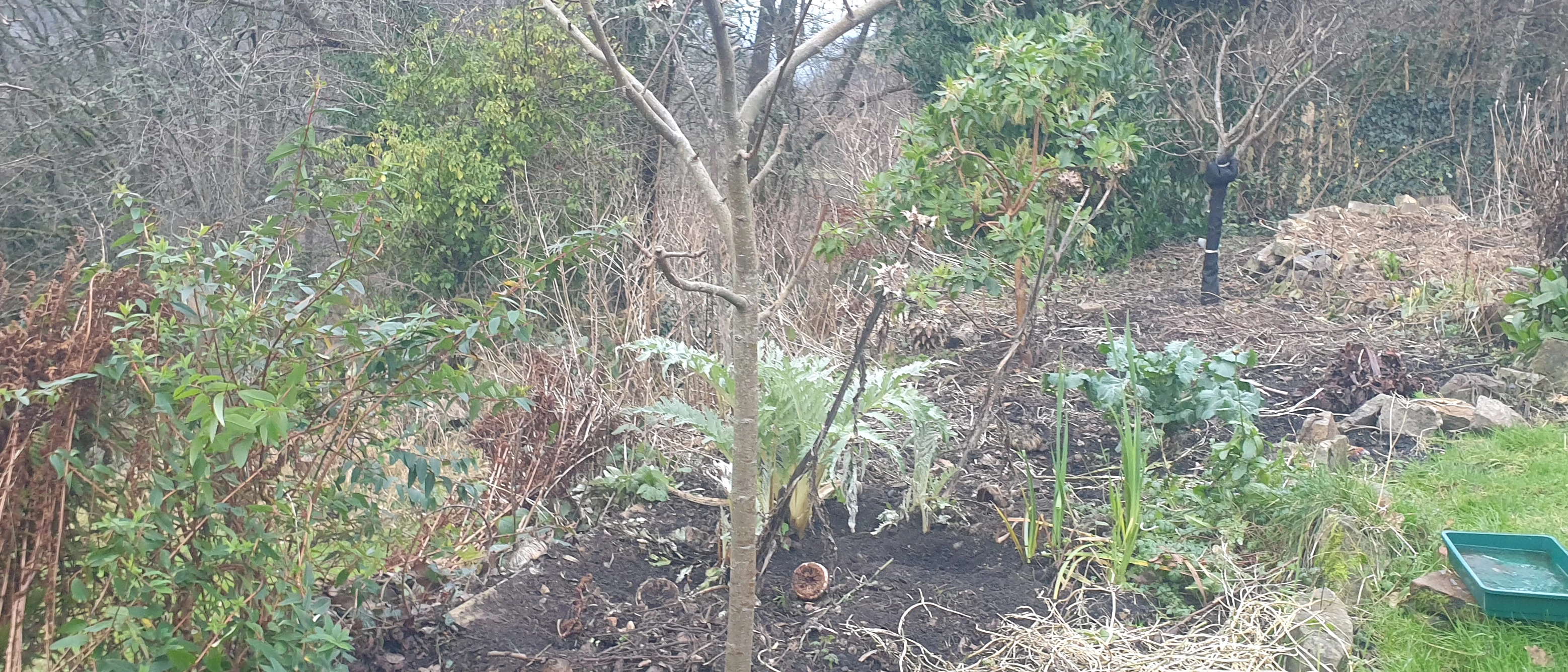
There’s a Welsh concept – cynefin – that roughly translates as “habitat” but carries deeper meaning. It suggests the place where something belongs, where it has adapted over time, where it feels at home.
Our mashua is developing its cynefin here in these mountains. Not native, certainly – its genetic origins are Andean. But becoming adapted. Becoming Welsh. Developing the characteristics that allow it to thrive in this specific place.
The Brecon Beacons provide excellent testing conditions. If crops can handle our exposure, frost, rainfall, and marginal soils, they can handle most UK conditions. Plants selected here bring proven resilience to your garden, wherever you are.
We take this responsibility seriously. Every season, we continue observing, selecting, and saving the strongest performers. The work never stops – adaptation is an ongoing process, not a one-time achievement.
Small and Slow Solutions
Permaculture principle #9 teaches us to use Small and Slow Solutions – they’re more sustainable, maintainable, and appropriate than large, fast interventions.
This guides everything we do.
We don’t grow mashua at commercial agricultural scale. We grow carefully, observing intensively, selecting rigorously. Quality over quantity. Adaptation over volume.
We don’t ship internationally or pursue rapid expansion. We focus on the UK permaculture community – people who understand why adapted genetics matter, who value perennial systems, who share our vision for resilient food production.
We don’t make exaggerated claims or market aggressively. We share honest information about growing mashua, including challenges. We want you to succeed, not just make a purchase.
This measured, patient approach feels right. It honors the work of indigenous Andean farmers who developed mashua over millennia. It respects the time required for genuine adaptation. It builds something lasting rather than extracting quick profit.
Looking Forward
Climate change is accelerating. The need for resilient, perennial-focused food systems grows more urgent each season. Traditional annual vegetable gardening – with its high inputs, soil disturbance, and dependency on favorable conditions – becomes increasingly fragile.
Perennial crops offer a different path. Once established, they require minimal inputs. They build soil rather than depleting it. They provide yields even in challenging years. They create habitat and support biodiversity. They embody resilience.
Mashua is one small piece of this transition. Not a silver bullet – no single crop is – but a valuable component of diverse, perennial-rich food systems adapted to British conditions.
Our vision is simple: more people growing more perennials, selected and adapted to their local conditions, building genuinely resilient food production from the ground up.
We’re honored to contribute to this work through mashua cultivation and sharing. We’re grateful to be connected with the UK permaculture community pursuing similar goals with different crops and methods.
And we’re excited to see where this journey leads – both for mashua as it continues adapting to Welsh conditions, and for the broader movement toward perennial agriculture in Britain.
Connect With Us
This work is ongoing, and we learn as much from you as you might from us. If you’re growing mashua – whether our stock or others – we’d love to hear about your experiences, observations, and results.
Share your successes, challenges, recipes, and insights. Ask questions. Offer feedback. Join us in building shared knowledge about perennial food production in UK conditions.
We’re all in this together – adapting, learning, and building resilience one planting at a time.
Growing resilient food systems, one tuber at a time.