From garden to table: discover the culinary potential of mashua. Cooking methods, recipes, preservation techniques, and nutritional benefits of this versatile Andean tuber.
What Does Mashua Taste Like?
Mashua has a unique flavour profile that surprises most first-time tasters. Understanding how to work with its characteristics is key to enjoying this unusual crop.
Raw Mashua
Taste: Distinctly peppery and spicy, similar to radish or watercress. This comes from the same compounds found in nasturtium (mashua is in the nasturtium family). The peppery bite can be quite strong, especially in tubers harvested before frost.
Texture: Crisp and crunchy, like a firm radish or turnip. Juicy when freshly harvested.
Best uses: Thinly sliced in salads (sparingly – a little goes a long way), pickled, or fermented.
Cooked Mashua
Taste: The peppery bite mellows significantly with cooking, leaving a pleasant earthy, slightly sweet flavour. After frost exposure and cooking, mashua develops subtle sweetness similar to parsnip or sweet potato, with lingering earthy notes.
Texture: Becomes soft and creamy when fully cooked, similar to potato but slightly denser. Holds its shape better than potato in stews.
Best uses: Roasting (our favourite), boiling, mashing, stews, soups, gratins.
The Frost Effect
This is crucial: frost exposure dramatically improves mashua flavour. Tubers harvested before hard frost tend to be more intensely peppery and can have bitter undertones. After several frosts, starches convert to sugars, the peppery compounds mellow, and the overall flavour sweetens considerably.
Our recommendation: Always wait until after first hard frosts (late October onwards in UK) before harvesting for eating. Your patience will be rewarded with much better-tasting tubers.
Preparing Mashua
Basic Preparation
- Washing: Scrub tubers under running water with a vegetable brush. The skins are thin and don’t need peeling (like new potatoes).
- Peeling (optional): You can peel if you prefer, but it’s unnecessary. The skin contains nutrients and adds texture.
- Cutting: Tubers vary in size. Cut larger ones into even pieces for uniform cooking; small ones can be cooked whole.
- Soaking (for raw use): If the peppery flavour is too strong raw, soak sliced mashua in cold water for 30 minutes to mellow it slightly.
Cooking Methods
Roasting (Highly Recommended)
This is our favourite way to prepare mashua. Roasting concentrates flavours, caramelizes natural sugars, and creates appealing texture contrast.
Method:
- Preheat oven to 200°C (180°C fan)
- Cut mashua into 2-3cm chunks (or halve small tubers)
- Toss with olive oil, salt, pepper, and herbs (rosemary, thyme work beautifully)
- Spread on baking tray in single layer
- Roast 30-40 minutes, turning once, until golden and tender
- Optional: Add garlic cloves, onion wedges, or root vegetable mix
Result: Crispy exterior, fluffy interior, sweet and earthy flavour with caramelized edges.
Boiling
Simple and effective, though less flavourful than roasting.
Method:
- Place whole or halved tubers in pot of cold, salted water
- Bring to boil, then simmer 15-25 minutes (depending on size)
- Test with knife – should pierce easily when done
- Drain and serve with butter, herbs, or use in other recipes
Uses: Mashing, potato salads, basis for other recipes.
Mashing
Mashua mashes beautifully, creating a creamy, slightly sweet puree.
Method:
- Boil tubers until very soft
- Drain thoroughly
- Mash with butter, milk, salt, and pepper
- Add cream cheese or sour cream for extra richness
- Season with nutmeg, garlic, or herbs to taste
Serving suggestions: Use like mashed potato as a side dish, or as topping for shepherd’s pie.
In Stews and Soups
Mashua holds its shape well in long-cooked dishes, making it excellent for winter stews.
Method:
- Add chunks to stews in last 30-40 minutes of cooking
- Use like potato in vegetable soups
- Pairs well with: beans, lentils, root vegetables, hardy greens
- Absorbs flavours from stock and herbs beautifully
Frying
Like potato, mashua can be fried for crispy results.
Methods:
- Pan frying: Slice thinly, fry in oil until golden and crispy. Season with salt.
- Chips/wedges: Cut into wedges, shallow or deep fry until crispy. Less fluffy than potato chips but delicious.
- Hash: Boil first, then dice and fry with onions for breakfast hash.
Recipe Collection
Simple Roasted Mashua with Rosemary
The perfect introduction to mashua
Ingredients:
- 500g mashua tubers, cut into chunks
- 2 tbsp olive oil
- 2-3 sprigs fresh rosemary
- 4 garlic cloves, unpeeled
- Sea salt and black pepper
Method: Toss all ingredients together, roast at 200°C for 35-40 minutes until golden. Squeeze roasted garlic from skins before serving.
Mashua and Root Vegetable Gratin
Rich, creamy winter comfort food
Ingredients:
- 300g mashua, thinly sliced
- 300g potatoes, thinly sliced
- 200g celeriac or parsnip, thinly sliced
- 300ml double cream
- 2 garlic cloves, crushed
- 100g grated cheese (cheddar or gruyere)
- Salt, pepper, nutmeg
Method: Layer vegetables in buttered dish. Heat cream with garlic and seasonings, pour over. Top with cheese. Bake 180°C for 50-60 minutes until tender and golden.
Pickled Mashua
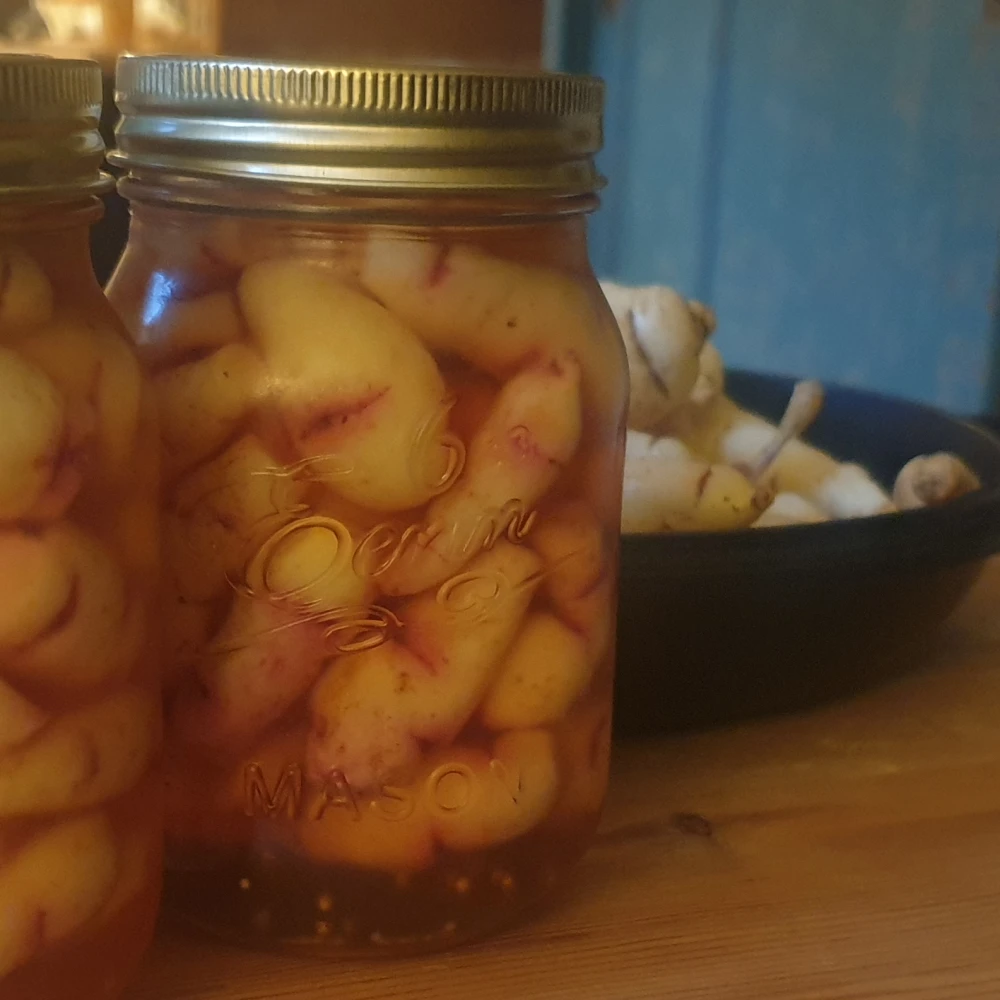
Traditional preservation method, delicious condiment
Ingredients:
- 500g mashua, thinly sliced or cut into sticks
- 250ml white wine vinegar or apple cider vinegar
- 250ml water
- 2 tbsp sugar
- 1 tbsp salt
- Spices: peppercorns, bay leaves, mustard seeds, chilli (optional)
Method: Pack mashua into sterilized jars with spices. Boil vinegar, water, sugar, and salt until dissolved. Pour over mashua, seal jars. Ready to eat after 1 week, improves with age. Keeps for months.
Mashua, Lentil and Kale Stew
Hearty, nutritious, permaculture-friendly one-pot meal
Ingredients:
- 400g mashua, cut into chunks
- 200g red lentils
- Large bunch kale or chard, chopped
- 1 onion, diced
- 2 carrots, diced
- 3 garlic cloves, minced
- 1 tin tomatoes
- 1 litre vegetable stock
- Cumin, coriander, paprika to taste
Method: Sauté onion, carrot, garlic with spices. Add lentils, stock, tomatoes. Simmer 15 minutes. Add mashua, cook 20 minutes. Add kale in last 5 minutes. Season and serve with bread.
Mashua and Wild Garlic Mash
Spring meets autumn – seasonal permaculture eating
Ingredients:
- 600g mashua
- Large handful wild garlic leaves (or regular garlic/garlic chives)
- 50g butter
- 100ml milk or cream
- Salt and pepper
Method: Boil mashua until tender. Meanwhile, finely chop wild garlic. Drain mashua, mash with butter and milk. Stir in wild garlic (the heat will wilt it). Season generously.
Using the Whole Plant
Mashua Flowers
The bright orange flowers appear in late summer and autumn – they’re not just beautiful, they’re delicious.
Taste: Peppery, sweet, slightly spicy – like nasturtium (they’re related)
Uses:
- Fresh in salads (whole flowers or petals)
- Garnish for soups and mains
- Stuffed with soft cheese
- Pickled in vinegar
- Frozen in ice cubes for drinks
Harvest sustainably: Take only some flowers, leaving plenty for pollinator support and your own enjoyment in the garden.
Young Leaves
Mashua leaves are edible, though use them sparingly – they’re quite peppery.
Best approach:
- Pick young, tender leaves only
- Use sparingly in mixed salads (like adding rocket/watercress)
- Chop finely and add to pestos
- Cook like spinach (mellows the pepper)
Note: Don’t over-harvest leaves – the plant needs them for photosynthesis to produce tubers. Take a few leaves here and there rather than stripping plants.
Storage and Preservation
Fresh Storage
Mashua stores excellently for months under proper conditions.
Method:
- Location: Cool, dark, frost-free place (shed, garage, cellar, unheated room)
- Temperature: 4-10°C ideal (warmer than this and they may sprout; freezing damages them)
- Container: Wooden box, cardboard box, or hessian sack
- Medium: Layer tubers in slightly damp sand, sawdust, newspaper, or straw
- Moisture: Keep medium barely damp, not wet (prevents shriveling and rot)
- Checks: Inspect monthly, remove any soft or sprouting tubers
Storage duration: 4-6 months easily, often longer. We’ve had tubers keep beautifully until March.
Do not store in refrigerator: Too humid, promotes rot. Mashua prefers cool and dry.
Pickling
See recipe above. Pickled mashua keeps for 6+ months in sterilized jars. Excellent condiment for cheese, cold meats, or adding to salads.
Fermenting
Like radish or turnip, mashua ferments beautifully using lacto-fermentation.
Simple method: Slice mashua, pack into jar with 2% salt brine (20g salt per litre water). Leave at room temperature 5-7 days, then refrigerate. Develops complex, tangy flavour.
Freezing
Not ideal for raw tubers (texture suffers), but cooked mashua freezes acceptably.
Method: Cook (roast or boil) first, cool completely, freeze in containers. Use within 3 months. Best for soups and stews where texture is less critical.
Nutritional Benefits
Mashua is nutritious as well as unusual.
Nutritional profile (per 100g):
- Calories: ~60-80 (similar to potato)
- Carbohydrates: Good source of complex carbs
- Protein: Higher than potato (around 7-10% of dry weight)
- Fiber: Decent source of dietary fiber
- Vitamin C: Good levels (especially when raw or lightly cooked)
- Iron: Contains iron (useful for plant-based diets)
- Antioxidants: Contains phenolic compounds and anthocyanins (especially colored varieties)
Traditional medicinal uses: In the Andes, mashua is valued for anti-inflammatory and antimicrobial properties. The peppery compounds (isothiocyanates) have antioxidant effects similar to those in broccoli and radish.
Tips for First-Time Mashua Cooks
- Harvest after frost: Cannot stress this enough – frost-sweetened tubers taste significantly better
- Start with roasting: It’s the most forgiving method and produces the best flavour
- Don’t be deterred by raw peppery taste: It mellows dramatically when cooked
- Mix with familiar foods: Combine with potatoes or other roots until you develop a taste for pure mashua
- Season generously: Mashua takes well to strong flavours – garlic, herbs, spices
- Cook thoroughly: Undercooked mashua can be unpleasantly firm and bitter
- Try the flowers first: If nervous about the tubers, start with flowers in salad – they’re universally enjoyed
Pairing Suggestions
Herbs and spices that complement mashua:
- Rosemary, thyme, sage (robust woody herbs)
- Garlic, onions (alliums generally)
- Cumin, coriander, paprika (warm spices)
- Black pepper, chili (echo the natural spiciness)
- Nutmeg, mace (in mashed dishes)
Foods that pair well:
- Other root vegetables (carrots, parsnips, celeriac)
- Legumes (lentils, beans – complete protein combination)
- Hardy greens (kale, chard, cabbage)
- Rich meats (lamb, beef, game)
- Cheese (especially strong flavours – cheddar, blue cheese)
- Butter and cream (mellows and enriches)
Ready to Cook?
Mashua rewards the adventurous cook. While unfamiliar at first, its unique flavour and versatility make it a valuable addition to the winter kitchen – especially when you’ve grown it yourself.
Our second-generation Welsh mountain stock produces excellent-flavoured tubers, particularly after exposure to our harsh mountain frosts.
Have a great mashua recipe to share? Get in touch – we’d love to hear how you’re cooking with this unusual tuber!